The Integral Approach
The thinking behind Desert Flower, in short.
A school for the whole child.
Integral Education comes from Sri Aurobindo and The Mother. Its starting point is simple. Education is not filling an empty vessel. It is helping the seed already inside a child to flower.
Most schooling trains the intellect and leaves the rest to chance. Desert Flower works with the whole child, every day, in Ladakh.
On the quality of your aim will depend the quality of your life. Your aim should be high and wide, generous and disinterested; this will make your life precious to yourself and to others.
Body, feeling, mind, inner self, spirit.
A child is more than a mind. Integral Education names five parts of a person and asks a school to grow them together.
Physical
The body. Strength, balance and stamina, built through games, sport, yoga and breathing.
Vital
Feelings and energy. Art, music, drama and teamwork teach a child to steer them.
Mental
The thinking mind. To reason, to question, and to connect ideas.
Psychic
The inner self that knows what is true for her. Quiet and reflection help a child hear it.
Spiritual
A sense of belonging to something larger. It shows as humility and care for all life.
How a teacher works here.
Sri Aurobindo set out three principles more than a hundred years ago. They still hold.
- 01
The first principle of true teaching is that nothing can be taught.
The teacher guides. Knowledge is drawn out of a child, not poured in.
- 02
The mind has to be consulted in its own growth.
Every child has her own nature and her own pace. We work with them.
- 03
Work from the near to the far, from that which is to that which shall be.
Start with her valley, her language, her home. Then widen out.
Sri Aurobindo, A System of National Education.
What the school stands on.
Five pillars turn the philosophy into a school day.
- 01
Contextual Curriculum
Learning begins with the child’s own place.
Ladakh’s mountains, glaciers, monasteries and villages are the first classrooms. A child who understands her own valley has the confidence to take on the wider world.
- 02
Experiential Pedagogy
Knowledge becomes wisdom through experience.
Children build, grow, test and perform. They make solar models, tend gardens, record wildlife and interview artisans. A mistake is information.
- 03
Higher-Order Thinking and Deeper-Order Feeling
Think critically. Feel deeply.
Children learn to analyse, question and create. They also grow empathy, gratitude and a sense of right and wrong, so that intelligence is guided by compassion.
- 04
A Transdisciplinary Approach
Life does not separate itself into subjects.
Real problems need joined-up thinking. The Ice Stupa, invented in Ladakh, draws on physics, geometry and the shape of a Buddhist stupa. No single subject would have found it.
- 05
Adhyatma
At the heart of education lies self-discovery.
Not religious instruction. Protected time for silence, reflection, conversation and service, so that a child comes to know herself.
Three kinds of knowledge.
School began with the 3Rs. Good schools moved on to head, heart and hands. The Integral Approach takes one more step.
- 3RReading, writing, arithmeticIt served the industrial age well.
- 3HHead, heart, handsA fuller picture, but something is still missing.
- 3AAdhibhoota, Adhidaiva, AdhyatmaKnowledge of nature, of society and of oneself.
Reading the wheel.
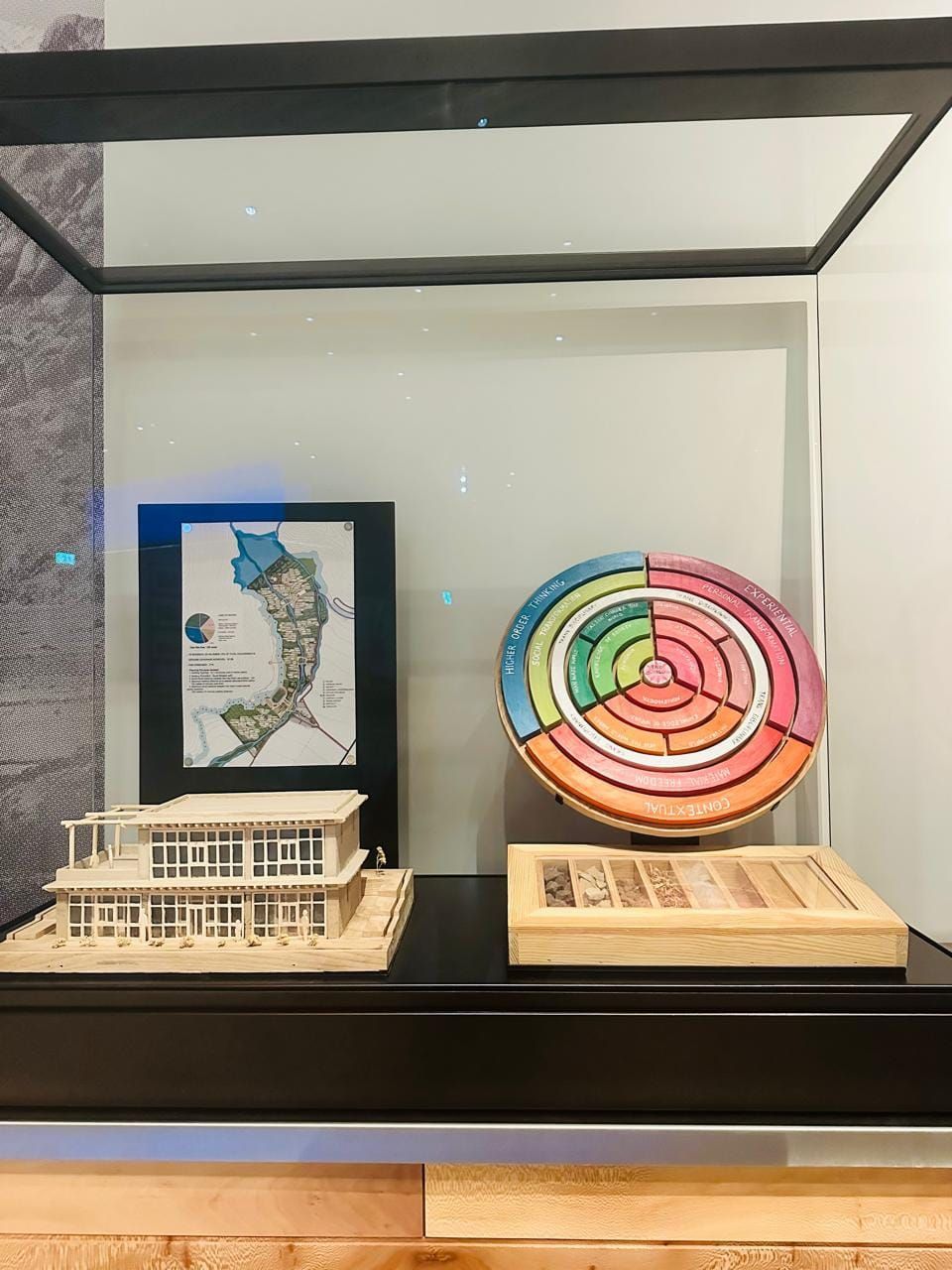
The child is at the centre. Around her sit three kinds of knowledge, then six questions, then what each one leads to. The outer ring names how she learns.
- AdhibhootaKnowledge of nature
- The material world and how it works. It leads to material freedom.
- AdhidaivaKnowledge of society
- Other people and the world we have made. It leads to social transformation.
- AdhyatmaKnowledge of oneself
- The inner life. It leads to personal transformation.
After the Integral Approach model. © 2019 Gitanjali J B. All rights reserved.
Questions in place of subjects.
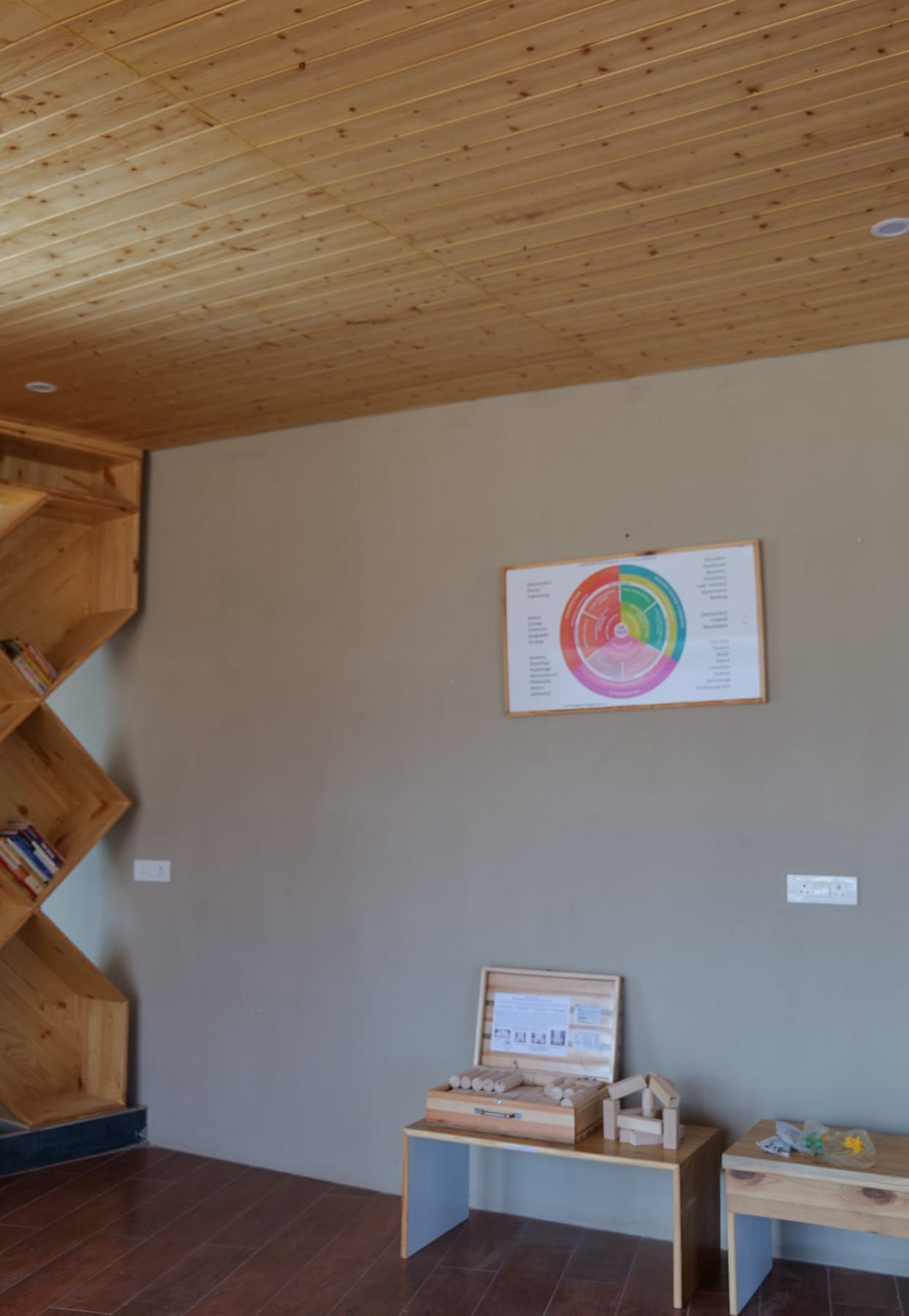
Subjects do not disappear. They are gathered under six questions a child actually asks.
The natural world
Botany, zoology, chemistry, geography, geology
How does the world work?
Mathematics, physics, engineering
The man-made world
Education, healthcare, business, economics, law, governance, banking
Ideas that changed the world
Democracy, the French Revolution and other turning points
Who am I?
Anatomy, physiology, psychology, neuroscience, philosophy, history, spirituality
How do I express myself?
Fine arts, theatre, music, dance, literature, science, technology
The campus is planned around the same six questions. Each has its own garden and its own learning spaces.
A guide, not a taskmaster.
A teacher here is a guide, a mentor, a facilitator and a fellow learner. She knows when to step in and when to let a child find her own way. The child’s curiosity sets the direction. The teacher gives it shape.
Three duties, held together.
Swadharma is a person’s own calling. Yugadharma is what her time needs from her. Sanatana Dharma is the lasting purpose of a human life. A good education helps a young person find all three and live them together.
Where this work has been shared.
- Registered for copyright in India in 2019 as Education for Tomorrow: An Integral Approach.
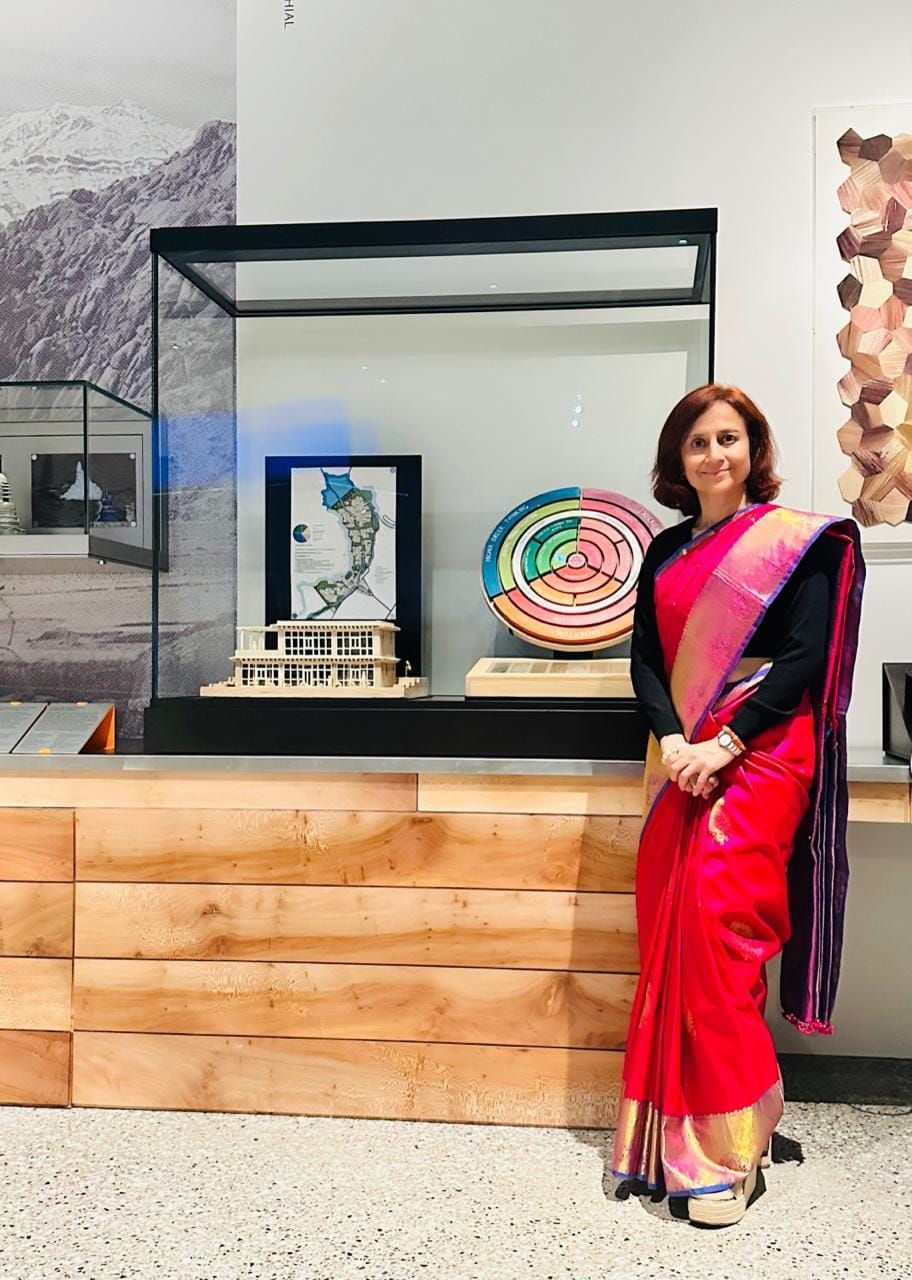
- Presented at the Victoria and Albert Museum, London.
- Used in teacher training by the Maharashtra International Education Board (2019) and at Auroville (2021).
- Presented at the University of Oxford and at Cambridge (2022), the Indian Montessori Association and INK Talks (2023), and the SNDT Memorial Lecture (2025).
- Published in four journals between 2019 and 2025.
Source. Gitanjali J Angmo, An Integral Education Framework for the Evolution of Human Consciousness in the Light of Sri Aurobindo. Doctoral thesis submitted to the Department of Humanities and Social Science, Sri Sathya Sai University for Human Excellence, April 2025. The thesis names Desert Flower as the school where the framework is applied.